Sealcraft Durham Insulation CompanySealcraft Durham Insulation Company

Blown-in insulation in Durham NC - even coverage from the middle to the eaves

Hot upstairs rooms and a climbing power bill usually start in the attic. We blow in an even layer and keep the eaves breathing.

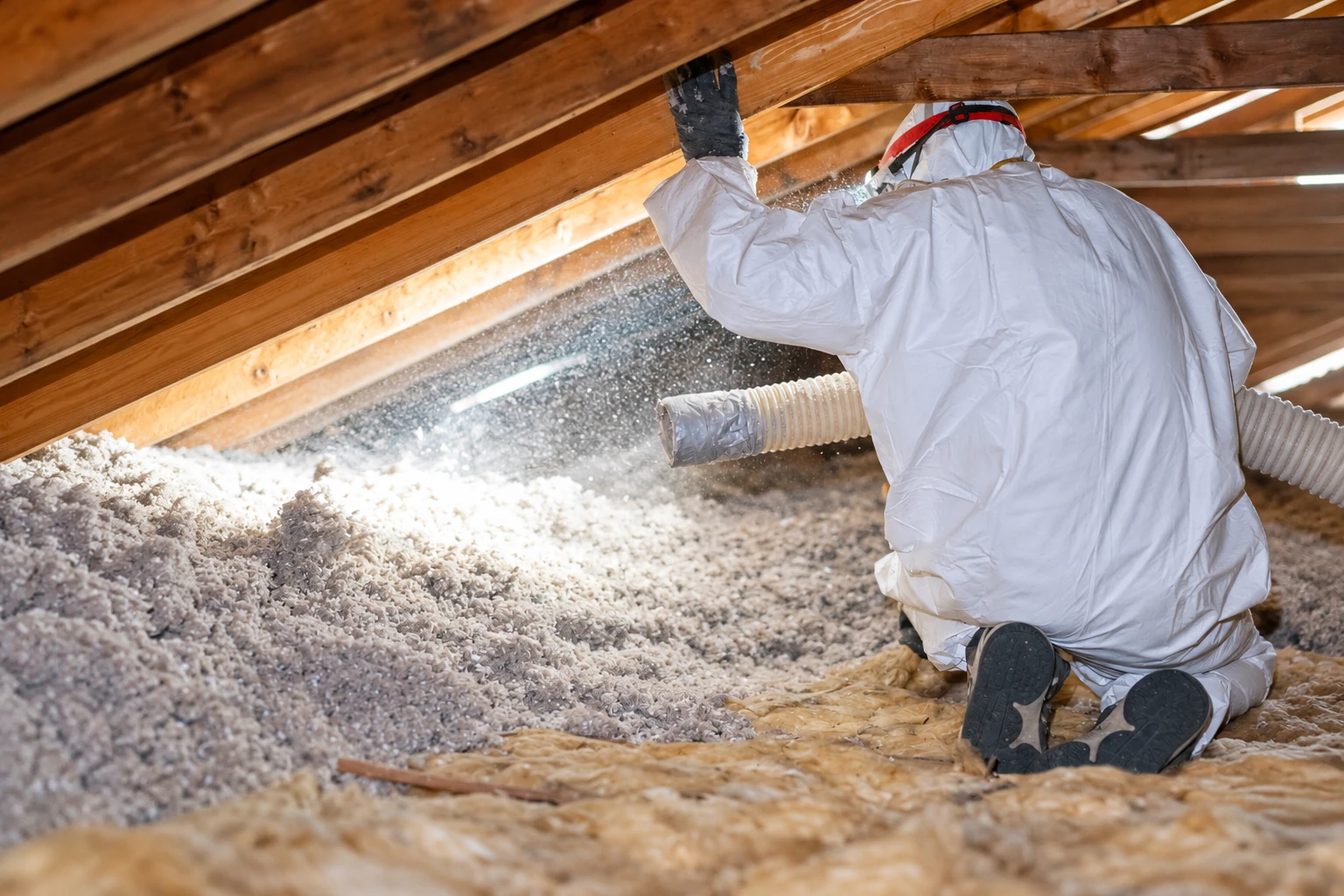
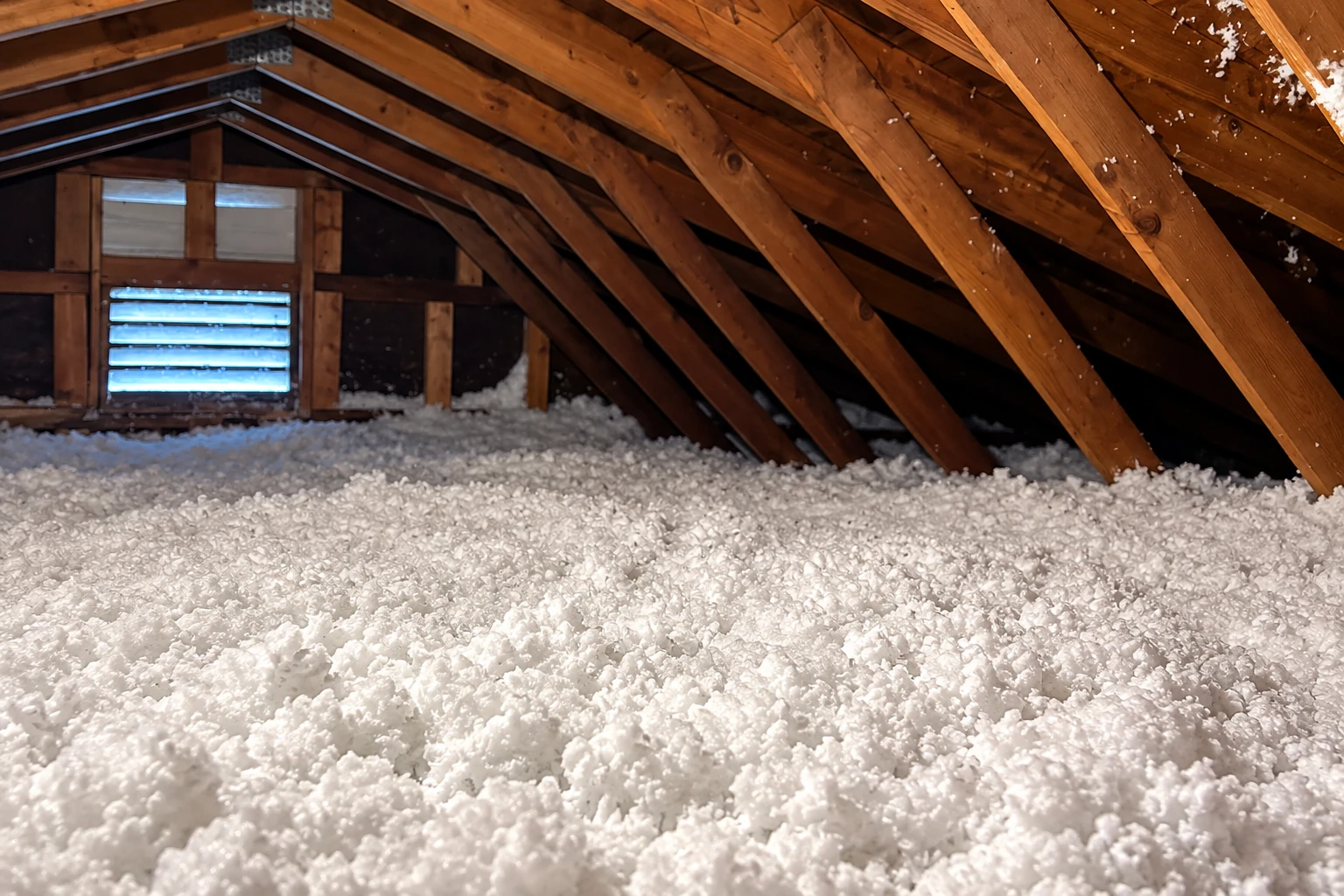
Loose white blown-in insulation covers an attic floor beneath exposed wooden roof trusses.

Blown-in insulation is loose cellulose or fiberglass blown through a hose onto your attic floor or into the walls you already have, and in Durham it's one of the simplest ways to slow the heat moving through a drafty, under-insulated house.

Is blown-in insulation right for your attic or walls?

Most calls start with one room. The upstairs is hot by mid-afternoon, or the room over the garage never warms up in January. When I go up, I usually find old fill that has settled and gone thin at the edges, right where it matters most. Blowing in more over a vented attic floor is often the fix, and finished walls can be filled too without tearing them open.

Price moves with the size of the attic, how many inches are already up there, how easy the hatch is to reach, and whether gaps need sealing or old material has to come out first. Walls add drilling and patching. The schedule turns on the same things, plus any wiring or vermiculite that has to be dealt with before we start. Your written estimate spells out each line, and I walk you through it.

Where blown-in insulation goes and what comes first

Blown-in fill does two jobs in most Durham houses, the attic floor and finished walls. Before either one, a couple of safety checks decide whether we can start at all.

Attic floor in a vented attic

If your attic has vents at the eaves or the roof, loose fill can go right onto the attic floor, between and over the ceiling joists. You can choose blown cellulose or blown fiberglass for it. It's the blown-in job we do most, because the attic floor is usually where a hot upstairs starts.

Attic, walls or both

A high bill and a hot upstairs usually point to the attic first. Walls come into it when a room stays cold after the attic is done, or when the walls were simply never filled. When I'm out there, I'll tell you which one your house needs, or whether it's both.

Old wiring and vermiculite first

Insulation shouldn't go over active knob and tube wiring, the old style with wires run on porcelain knobs, until it's replaced or properly boxed in. If the old fill is vermiculite, a pebbly gray-brown material that may contain asbestos, the work stops until that's handled. Better to find it at the estimate than on install day.

What happens after you call us about blown-in insulation

Here's how a blown-in job runs with us, from the first call to the walk-through at the end. You'll know what we found and what we plan before anyone carries a hose into your attic.

  1. 1

    Call or send the form

    Call (919) 246-8605 or send the form with a line about what's bothering you, whether it's a hot room, a drafty wall or a high bill. We'll get back to you and set a time to come look.

  2. 2

    I look at it with you

    I come out myself, go up in the attic or check the walls with you, and explain what I see and what I'd do first. Then you get a written estimate for the work.

  3. 3

    Our crew does the planned job

    Our trained installers do the work the way we planned it, with a crew lead on site. If the attic shows us something we couldn't see before, you'll hear about it before we go further.

  4. 4

    We show you what we did

    Before we leave, we take you through what went in and where, so you understand your own attic. Ask whatever you like while we're there, even if it's the same question twice.

Request an estimate

How we put in blown-in insulation

We start by clearing the attic floor so the new fill lies level and touches it, with no boxes or loose boards making hollows. Then we set depth markers, rulers fixed to the framing across the attic, so you can climb up later and see how many inches went in. A layer you can measure is a layer you can check for yourself.

Next come baffles, chutes that fit between the rafters at the eaves and hold the fill back from the vents, so outside air still moves through the attic. Without them the vents get buried, the attic stops breathing and moisture can show up in the framing. With them we carry full depth out to the top plate, the top edge of the wall framing, instead of piling it in the middle.

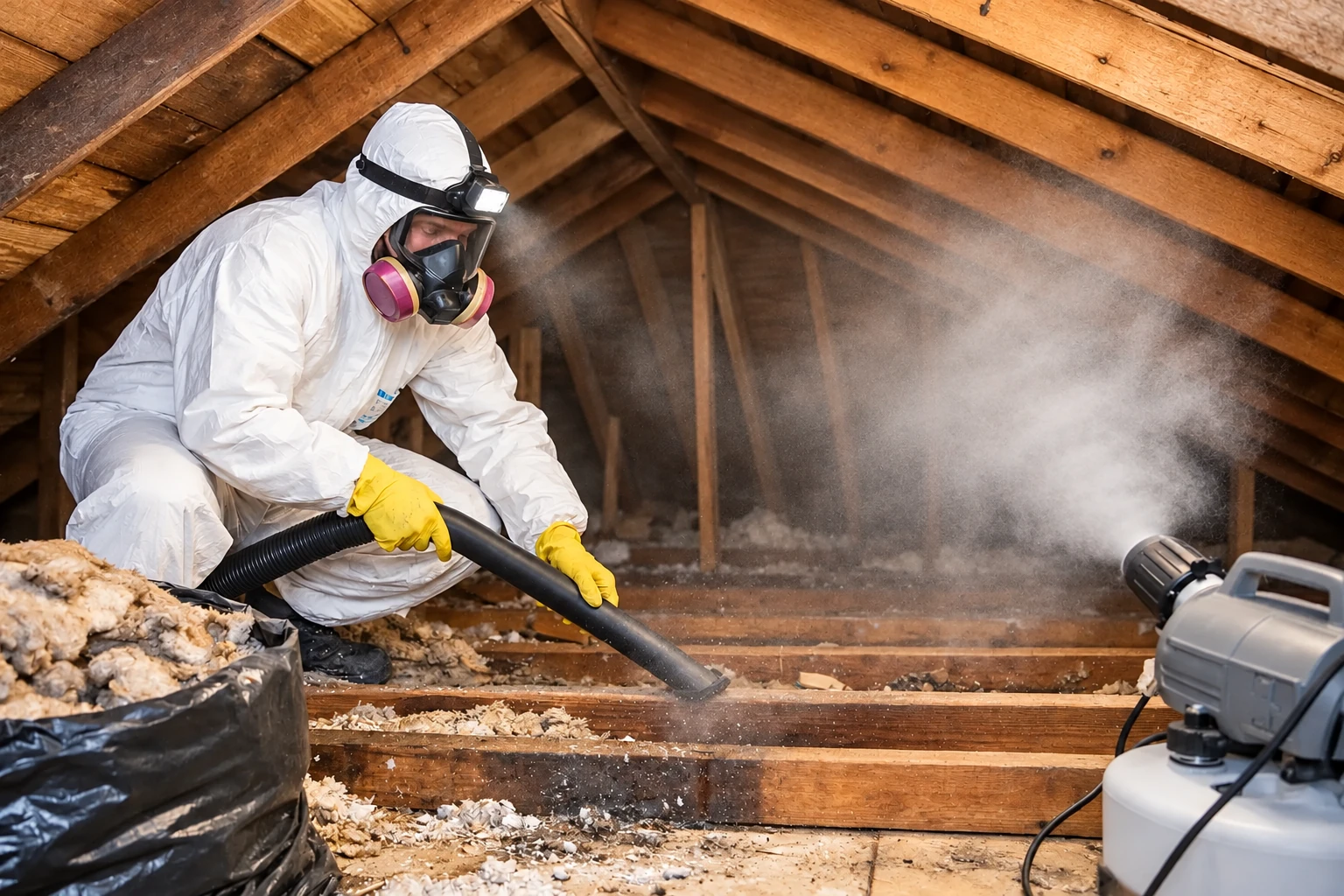
Not every attic gets topped up. If the old fill was soaked by a roof leak or is full of droppings, laying fresh material over it keeps the problem in your house, so it comes out first with insulation removal. And if the attic is one part of a bigger fix for drafty rooms and cold floors, our home insulation work looks at the whole house.

Fill walls from inside

Holes go through the drywall or plaster inside the room. Afterward they're plugged with gypsum board or rigid foam, coated with joint compound, sanded smooth and painted, so the wall looks the way it did.

Fill walls from outside

Holes go through the exterior wall instead, so the rooms stay untouched and you don't have to pull furniture away from the walls. Which side works better depends on your siding, and I'll go over it with you.

Get a written estimate for blown-in insulation

Send the form and we'll reply within one business day to set a time. I'll come out, look at your attic or walls with you and give you a free written estimate. There's no obligation to go ahead.

(919) 246-8605

info@durhaminsulationcompany.com

Blown-in insulation permits in Durham

In Durham, permits come from the City-County Building & Safety Department. The city requires one for any project with load-bearing work or over $40,000 in market value, and the state licensing board requires a general contractor's license once a project's total cost reaches $40,000. Those rules don't settle whether a plain attic job needs a permit, so we check with the office before we start, and where one's needed we handle the paperwork and meet the inspector.

We're based in Durham and work in the cities around it, including Chapel Hill and Raleigh, doing the same steps in the same order. Around here we see older houses with walls that were never filled and newer ones where the attic just got too little to begin with. If you're not sure we come to you, just ask.

Why Durham homeowners call Sealcraft for blown-in insulation

I learned this trade on commercial crews, spraying foam and fitting board in warehouses and schools, and that's where I saw that most insulation problems come from a step someone rushed. I started Sealcraft Durham Insulation Company in 2013 to bring that care to houses. That's 13 years of doing the steps in order and explaining each one before we touch anything.

I come out and write every estimate myself, so the person explaining your attic is the one who planned the job. Our trained installers do the work with a crew lead on site. We're licensed and insured. Satisfaction guaranteed. If you'd like to know what's really going on up there, call (919) 246-8605 or send us the form.

Insulation removal

When the old fill is wet, moldy or full of droppings, taking it out gives the new layer a clean, dry floor to sit on.

Home insulation

If more than one room feels off, a look at the whole house shows where the attic fits with the walls, floors and crawl space.

Where we do blown-in insulation

We do blown-in work across Durham and in the cities listed below, plus others nearby. If your city isn't on the list, give us a call and ask.

Blown-in insulation questions from Durham homeowners

How much does blown-in insulation cost in Durham, NC?

In nearby Raleigh, installed blown-in insulation usually runs about $1.50 to $6 per square foot. Where your job lands depends on the attic's size, the depth already up there, and whether air sealing or removal has to come first. Your written estimate gives you your own figure, line by line.

How long does it take to blow insulation into an attic?

Most of the time goes to the work before the hose comes out, not the blowing itself. A clear, dry attic with an easy hatch moves along quickly. Air sealing, baffles, old fill coming out or walls to drill and patch all add time, and I'll tell you what to expect when I'm out there.

What should I do to get my attic ready for blown-in insulation?

Move anything you've stored up there, because boxes and loose boards keep the fill from lying level and touching the attic floor. Clearing a path to the hatch helps too, since our crew will be up and down it a lot.

What happens in the attic before blown-in insulation goes in?

First comes a look for roof leaks, moisture, and pest or structural damage, and anything that needs fixing gets done before insulation. Then the gaps get closed. Attic air sealing means sealing the holes around pipes, wires, can lights and the hatch, so the new layer isn't fighting a draft.

Can you insulate finished walls through small holes?

Yes. The usual method, called drill and fill, puts small holes near the top of each wall cavity, the space between two studs, and fills each one with blown-in material. It's far less disruptive than opening the walls, and the holes can go in from inside the room or from outside.

Who handles building permits and inspections in Durham?

The City-County Building & Safety Department handles permits, plan review and inspections for both the City of Durham and Durham County. That means it's the same office whether you're inside city limits or out in the county. We take care of the permit side for you, as described in the Durham section above.

Get your attic looked at before you insulate

When you call (919) 246-8605 or send the form, tell us how you reach the attic, its rough square footage and any knob and tube wiring or vermiculite you know about, so I come out ready.

(919) 246-8605Request an estimate