Sealcraft Durham Insulation CompanySealcraft Durham Insulation Company

Crawl space vapor barrier in Durham NC - a drier crawl space under sound floors

Musty smell, cold floors or damp joists under the house? We cover the crawl space ground and seal the space when it needs it.

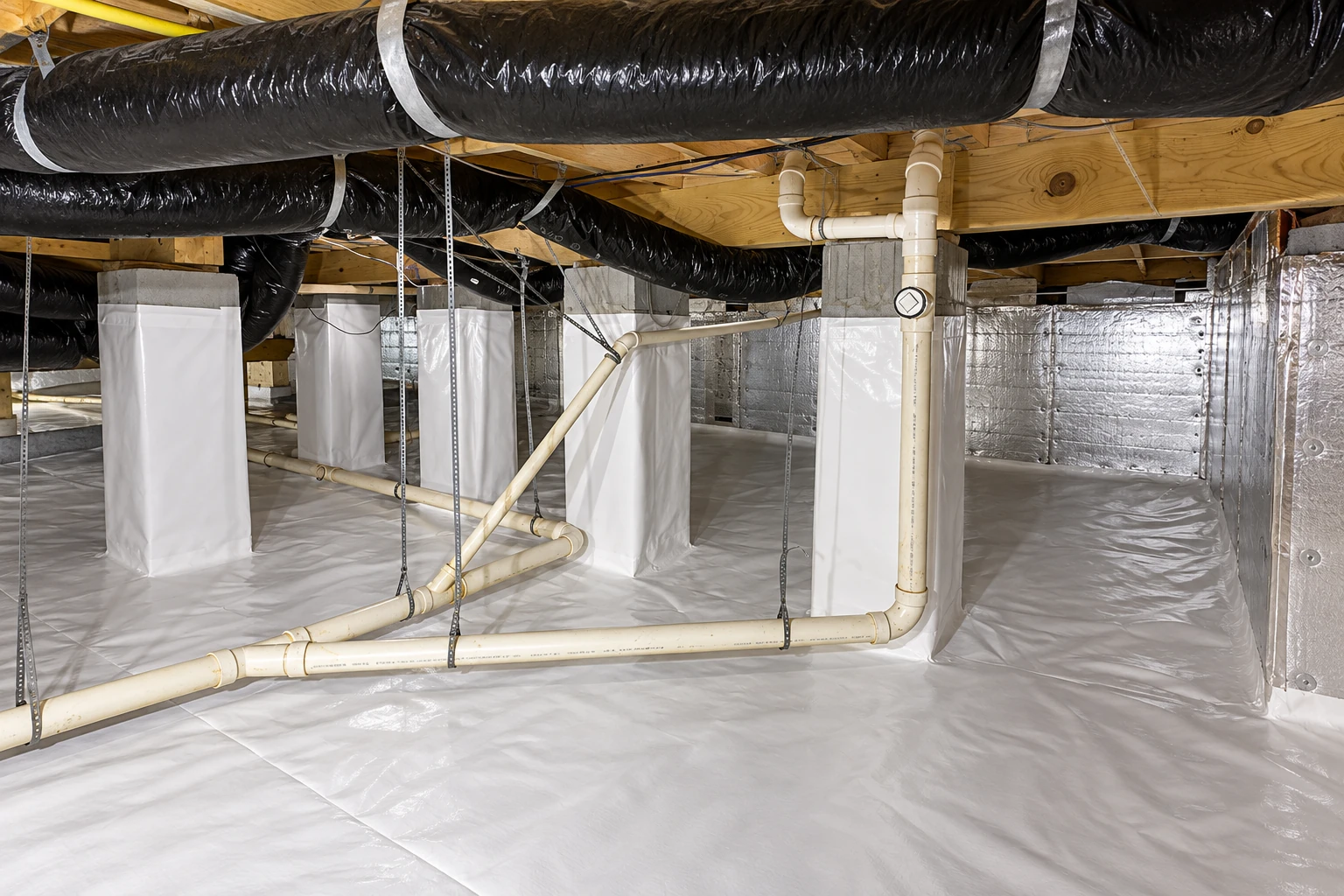
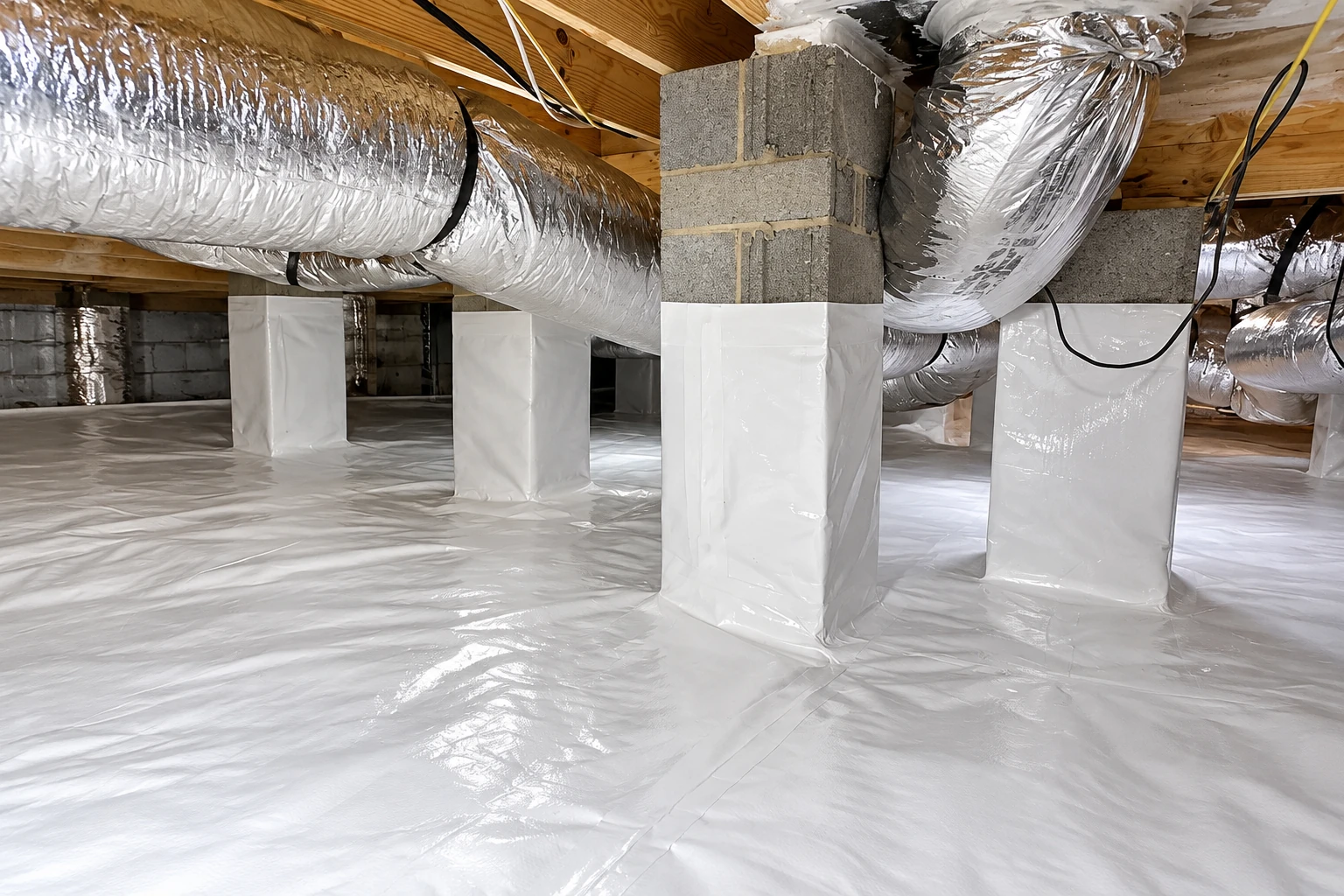
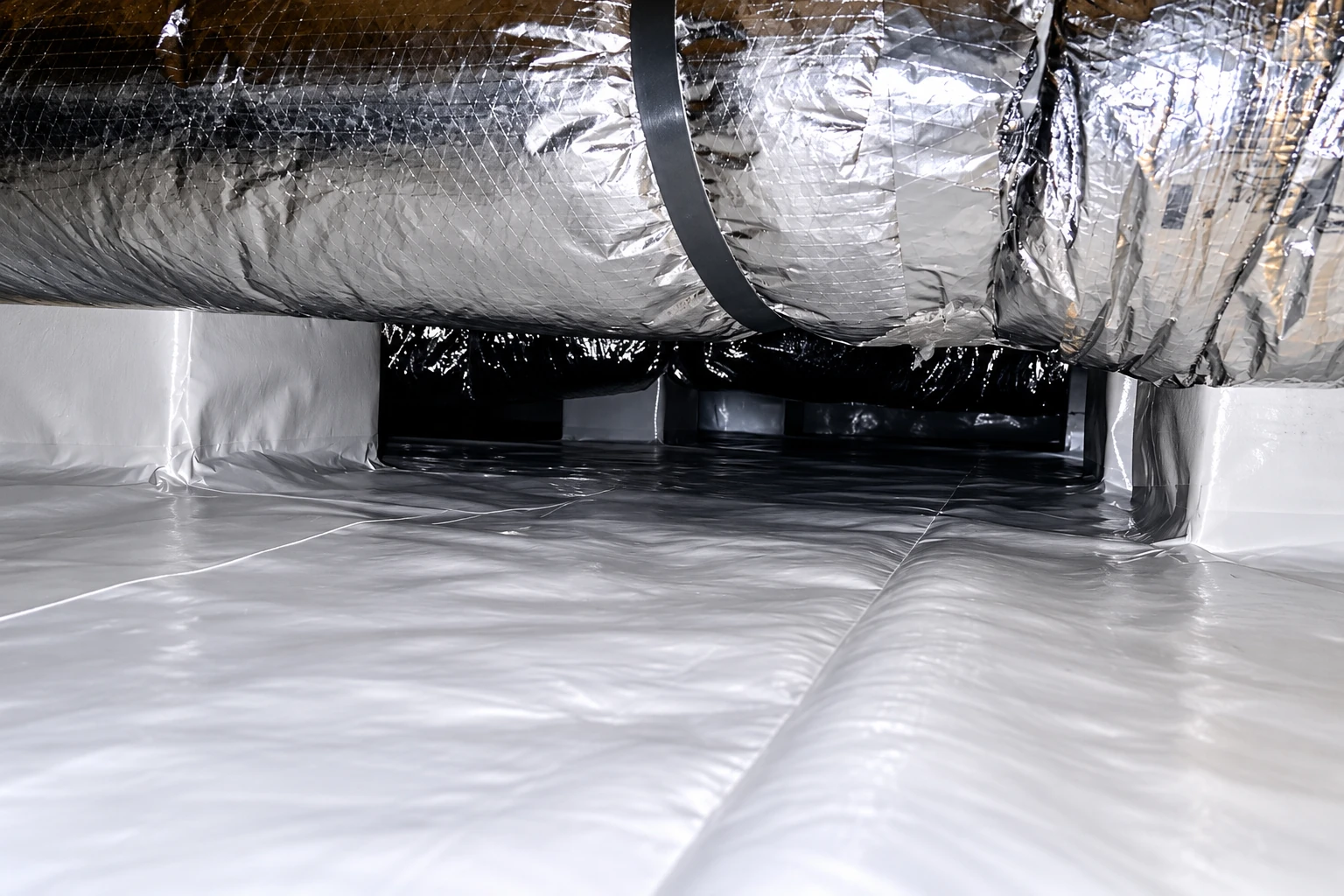
A crawl space has white vapor barrier sheeting across the floor and wrapped around support columns, with a dehumidifier at center.

A crawl space vapor barrier in Durham is a heavy sheet laid over the dirt under your house to cut down the water evaporating up from the ground, and in a fully sealed crawl space it runs up the walls too.

What does a crawl space vapor barrier actually do?

Most calls start with a smell. The house is musty, the floors feel cold or clammy, or someone went under to fix a pipe and came back talking about wet dirt and fuzz on the joists, the wood beams that hold up your floor. When I see that, the question isn't only whether you need a barrier. It's how much of the moisture problem a barrier alone will fix.

The price turns mostly on which job you pick, a liner on the ground or a fully sealed space with drying equipment. After that it's the size of the crawl space, how much room there is to crawl, and what has to be cleared out before anything new goes down. Your written estimate shows which of those apply to your house.

The schedule turns on what has to happen first. If the wiring needs an electrician, or something down there has to be changed before the space can be closed, that comes before our crew starts. Once a space is sealed, how fast it should dry out matters too, and we plan for that instead of rushing it.

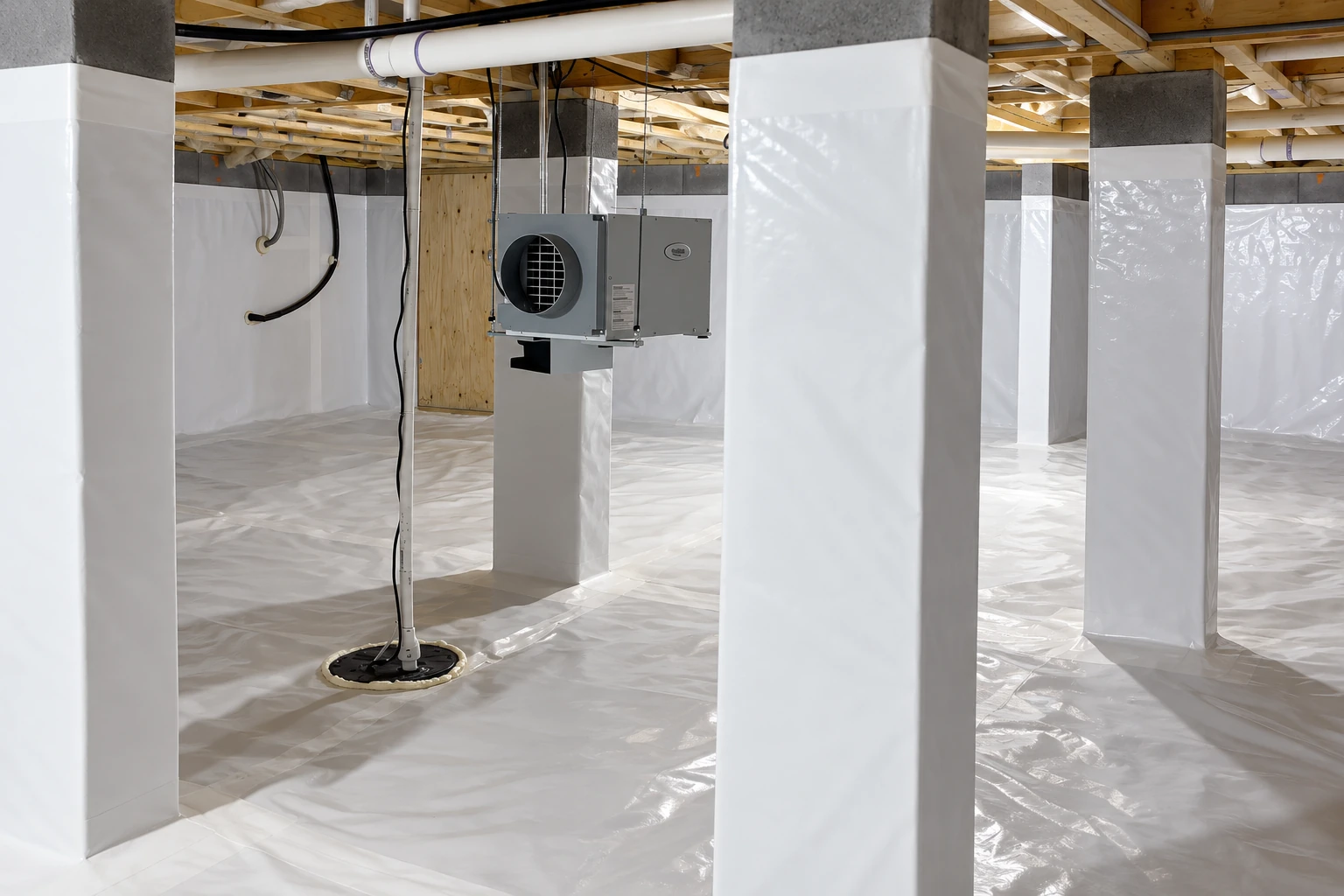
What we look at before a liner goes down

A liner only does its job if the ground under it and the space around it are ready. These are the things I check under a Durham house before I tell you what a liner will and won't do.

Old plastic and debris come out

Plenty of crawl spaces already have a thin sheet of plastic down, torn up by years of plumbers and cable installers crawling over it. New liner laid over torn plastic, wood scraps or fallen insulation just traps the mess underneath, so we clear the ground first and you start with a clean floor to cover.

Seams, piers and pipes sealed

Moisture finds the weakest spot, and on a liner that's where sheets overlap, where they meet the piers and where pipes come up through the ground. So the seams get overlapped and taped and the edges get fastened down. A sheet that just lies loose leaves the ground breathing around it.

Wet insulation above the liner

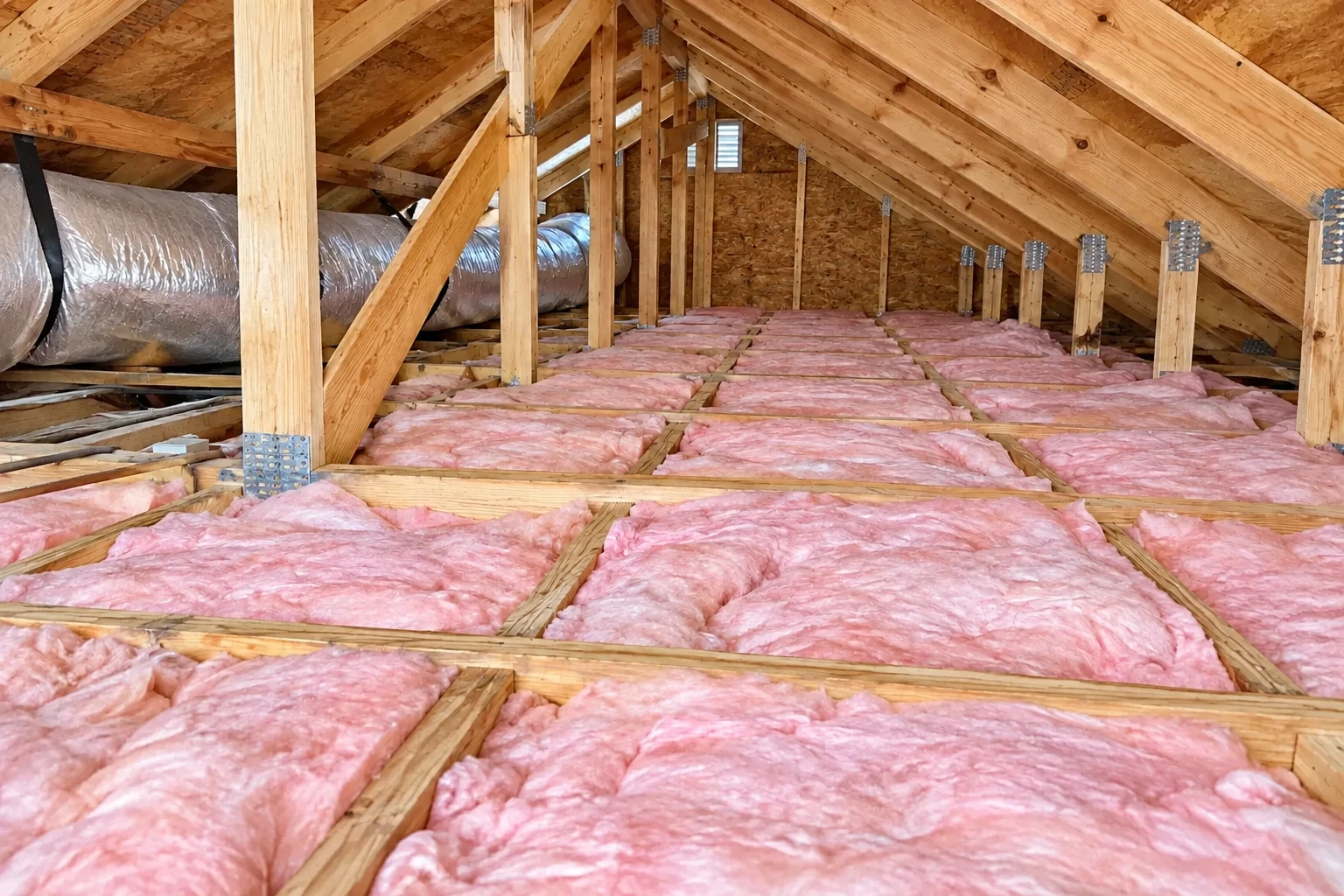
Look up as well as down. Fiberglass batts between the floor joists soak up crawl space moisture, then sag or drop, and wet insulation does little to keep your floors warm. If what's up there is soaked or full of droppings, new liner underneath won't fix it, so I'll tell you and we'll plan for it.

What happens after you call about your crawl space

Here's how a crawl space job runs with us, from the first call to the walk-through at the end, so you know who you'll be talking to at each step.

  1. 1

    Call or send the form

    Call (919) 246-8605 or use the form and tell us a little about the house. We get back to you and set a time for me to come out.

  2. 2

    Look under the house together

    I come out, go through the crawl space, and then explain what I saw and what I'd do first. You get a written estimate, and I walk you through each line of it.

  3. 3

    Our crew does the work

    Our trained installers do the job the way we planned it, with a crew lead on site, so there's one person to ask if you have a question while we're working.

  4. 4

    See what we did

    Before we leave, we show you what we did, what's covered and what's sealed, so you know what's under your house the next time someone has to crawl in there.

Request an estimate

How we put in a crawl space vapor barrier

Before I price anything, I show you the difference between a plain ground liner and a fully sealed crawl space with drying equipment, so you know what each one includes and what it leaves out. Most people have heard the word encapsulation and not much else. Seeing your own crawl space with both options laid out makes the choice a lot easier.

Wiring comes first. Before anyone lies on their back under your floor, we check the crawl space wiring, and if anything looks unsafe, an electrician goes in before we do. That isn't us being fussy. A crew on damp ground next to a bare wire is how people get hurt, and a liner shouldn't go down over a problem nobody looked at.

Your house breathes from the bottom up, because warm air leaking out through gaps up top gets replaced by air from below, often from the crawl space. That's why attic air sealing, closing the gaps around lights, pipes and the hatch, often pairs with this job. If you need a moisture layer somewhere other than the crawl space, that's our vapor barrier installation work.

Ground liner only

A sheet over the dirt, seams taped and edges fastened. It cuts the moisture coming up from the ground, but the walls, the air leaks and the humidity in the air are left as they are.

Fully sealed with drying

The liner runs up the walls, the vents and gaps get closed, and drying equipment keeps the air in check. It's more work and more money, and anything that burns fuel down there gets planned around first.

Get your crawl space looked at and a written estimate

We reply within one business day. I come out, look at the crawl space with you and explain what I see, and then you get a free written estimate with no obligation to go ahead.

(919) 246-8605

info@durhaminsulationcompany.com

Crawl space vapor barrier rules and radon in Durham

If we seal your crawl space instead of just lining it, the state residential code says a closed crawl space shall have a mechanical drying capability to control moisture. So a full seal comes with drying equipment, usually a dehumidifier, as part of the job. The drying method you pick also decides what licensing the job calls for, and other trades on it, an electrician for one, may need their own license.

The state general contractor board requires a licensed general contractor when a project's total cost is valued at $40,000 or higher. The board also runs a Homeowners Recovery Fund, which reimburses homeowners who suffered a reimbursable loss while building or altering a single-family home. It's worth knowing it's there before you hire anyone for work on your house.

Radon is the other local reason to think about your crawl space. The state's radon data lists 76 picoCuries of radon per liter of air as the highest level measured in Durham County. A lot of the homes we get into around Durham and Chapel Hill sit over vented crawl spaces, and if you're not sure we come to you, just ask.

Why Durham homeowners call Sealcraft about their crawl space

I learned this trade on commercial crews, spraying foam and fitting board in warehouses, schools and office buildings, and what stuck with me is that most insulation problems trace back to a step someone rushed. I started Sealcraft Durham Insulation Company here in 2013 to bring that care to houses, and 13 years on, that's still how we approach a crawl space.

I look at the job and write the estimate myself. Our trained installers do the work with a crew lead on site. We're licensed and insured. Satisfaction guaranteed. I'd rather lose a job by telling you a liner is all you need than sell you a full seal your house doesn't call for.

If you want to know what's going on under your floor, call (919) 246-8605 or send us the form, and I'll come out and take a look with you.

Vapor barrier installation

Useful when moisture is getting into a part of the house other than the crawl space and that spot needs its own barrier.

Attic air sealing

Closing the leaks at the top of the house slows how much damp crawl space air gets pulled up into your rooms.

Cities we cover for crawl space work

We're based in Durham and do crawl space vapor barriers in the cities around it, including Raleigh, Chapel Hill, Cary and Burlington. If your city isn't on the list, call and ask.

Crawl space vapor barrier questions from Durham homeowners

How much does a crawl space vapor barrier cost in North Carolina?

A basic vapor barrier, just a ground liner, usually costs about $1,500 to $4,000 per job in North Carolina. That's the going rate across the state, not our price, and it covers the ground only, so wall work, air sealing or drying equipment comes on top. Your written estimate shows which of those your house needs.

Is a vapor barrier on the ground enough, or should my crawl space be sealed?

A ground liner is enough when the space is fairly dry and you mainly want the dirt covered, but it does nothing about damp air coming in through the vents. Research found vented crawl spaces in climates like ours tend to gain moisture, which condenses on the cooler floor framing and feeds mold and rot. If your joists already show it, I'd lean toward sealing.

Can I just close my crawl space vents to keep it dry?

No, closing the vents alone can raise the moisture, because the damp air is shut in with nothing drying it out. It can also be deadly if a gas furnace or water heater down there draws its air from the crawl space. That equipment gets planned for before any vent is closed, and a sealed space needs drying equipment, as covered above.

Should a house with a crawl space be tested for radon in Durham?

Yes. The NC Radon Program says every type of home should be tested, homes with crawl spaces included. Radon levels vary from one house to the next, and a test is the only way to know your own. If you're already planning work in the crawl space, it's a good time to find out where you stand.

How long does it take to seal a crawl space?

Laying the liner is usually the shorter part, and most of the time goes into what has to happen first and into drying the space out. Wiring repairs or changes to gas equipment come before we start. Once the space is closed, it can be better to dry it slowly, because drying too fast can cause cosmetic damage to wood finishes in the rooms above.

What should I have ready when I call about a crawl space vapor barrier?

Have your address handy, and know whether the crawl space vents are open and whether a furnace, water heater or anything else that burns fuel sits down there. Those answers shape the first conversation. If you're not sure, that's fine, because I'll see it when I come out.

Have someone look under your floor

Call (919) 246-8605 or send the form, because damp framing that gets looked at early is usually still sound wood.

(919) 246-8605Request an estimate